How I Found Calm Through Yoga and Science-Backed Mindfulness
Stress used to rule my days—until I tried yoga and mindfulness rooted in science, not mysticism. No magic, no miracles, just real shifts in how I sleep, focus, and handle pressure. Inspired by traditional Chinese wellness principles but grounded in modern research, this isn’t about perfect poses or emptying your mind. It’s about small, doable changes that actually stick. Here’s what worked for me—and how it might help you live a calmer, clearer life.
The Burnout That Changed Everything
For years, exhaustion was my normal. I was the kind of person who prided myself on pushing through—working late, skipping meals, answering emails in bed. I told myself it was dedication, but in truth, it was burnout disguised as productivity. My sleep was fragmented, my energy dipped by mid-afternoon, and even small setbacks felt overwhelming. I’d wake up with a tight chest, already bracing for the day. Over-the-counter sleep aids offered brief relief, but never solved the root issue. Neither did caffeine, quick workouts, or weekend getaways. The problem wasn’t just my schedule—it was my nervous system, stuck in a constant state of alert.
It wasn’t until I stumbled upon the concept of “yangsheng”—a traditional Chinese approach to health that emphasizes balance, prevention, and daily self-care—that I began to shift my thinking. Unlike the Western model of treating illness after it appears, yangsheng focuses on nurturing well-being before problems arise. It’s less about fixing and more about maintaining. This preventive mindset resonated deeply. I realized I’d been waiting for a crisis before acting, rather than tending to my health every day. That’s when I decided to explore practices like yoga and mindfulness, not as spiritual trends, but as tools supported by science.
I wanted something practical, not esoteric. No chanting, no promises of enlightenment. Just methods that could help regulate my stress response, improve sleep, and restore a sense of calm. I began reading studies from institutions like Harvard Medical School and the National Institutes of Health, looking for evidence-based benefits. What I found wasn’t mystical—it was physiological. Yoga and mindfulness weren’t just “feel-good” practices; they were influencing cortisol levels, heart rate variability, and brain structure. That scientific grounding gave me the confidence to commit, not as a last resort, but as a sustainable strategy for long-term wellness.
Yoga Beyond the Mat: What Science Actually Says
When most people hear “yoga,” they picture complex poses and flexible bodies. But modern research reveals that the true power of yoga lies not in how deep you can stretch, but in how it recalibrates your nervous system. At its core, yoga is a practice of integration—uniting breath, movement, and awareness to signal safety to the body. This is especially important in a world where chronic stress keeps many of us in fight-or-flight mode far too often. The physical postures, or asanas, are just one component. The real shift happens through breath regulation and interoception—the ability to sense what’s happening inside your body.
Peer-reviewed studies have consistently shown that regular yoga practice reduces cortisol, the primary stress hormone. A meta-analysis published in the journal Psychoneuroendocrinology found that participants who practiced yoga three times a week for eight weeks experienced significant decreases in cortisol levels compared to control groups. Another study from the University of Utah demonstrated that yoga practitioners had higher heart rate variability (HRV), a key marker of resilience. High HRV means your body can adapt more efficiently to stress, recover faster, and maintain emotional balance. These aren’t abstract concepts—they translate into real-life benefits like better sleep, fewer headaches, and improved digestion.
Neuroimaging research also shows that yoga can enhance brain function. A 2019 study in Frontiers in Human Neuroscience found increased gray matter density in areas related to attention, emotional regulation, and self-awareness among long-term practitioners. This isn’t about achieving enlightenment; it’s about training your brain to respond rather than react. You don’t need to twist into a pretzel to benefit. Even gentle forms like restorative or yin yoga, which emphasize slow movements and extended holds, activate the parasympathetic nervous system—the “rest and digest” state that counteracts chronic stress. The science is clear: yoga works not because it’s trendy, but because it aligns with how the human body maintains balance.
Mindfulness That Makes Sense—Without the Hype
Mindfulness has become a buzzword, often oversold as a cure for everything from anxiety to insomnia. But stripped of the marketing, mindfulness is simply the practice of paying attention to the present moment without judgment. It’s not about stopping thoughts or achieving a blank mind—that’s neither possible nor necessary. Instead, it’s about noticing when your attention drifts and gently bringing it back. This simple act, repeated over time, can rewire the brain in measurable ways. Neuroscientists refer to this as neuroplasticity—the brain’s ability to change based on experience.
One of the most compelling studies on mindfulness comes from Harvard and Massachusetts General Hospital, where researchers used MRI scans to track brain changes in participants who completed an eight-week Mindfulness-Based Stress Reduction (MBSR) program. They found increased gray matter density in the hippocampus, which governs learning and memory, and in the prefrontal cortex, responsible for decision-making and emotional regulation. At the same time, the amygdala—the brain’s fear center—showed a reduction in volume. This means practitioners weren’t just feeling calmer; their brains were actually becoming less reactive to stress.
What makes mindfulness accessible is that it doesn’t require hours of meditation. You can practice it while washing dishes, walking, or even brushing your teeth. The key is consistency, not duration. A 2018 study in Behaviour Research and Therapy found that just ten minutes of daily mindfulness practice led to significant reductions in anxiety and rumination after four weeks. The benefits build gradually: improved focus, greater emotional stability, and a stronger sense of self-awareness. Over time, you begin to notice patterns—how certain thoughts trigger stress, how your body tenses before a meeting, how your mood shifts after scrolling social media. This awareness becomes a tool for making intentional choices, rather than being on autopilot.
Blending East and Evidence: The Yangsheng Connection
What surprised me most was how closely modern neuroscience aligns with ancient wellness traditions like yangsheng. This Chinese concept, dating back thousands of years, views health as a dynamic balance between internal and external forces. It emphasizes living in rhythm with nature, eating seasonally, moving the body gently, and cultivating inner peace. While the language differs—ancient texts speak of “qi” (vital energy) and “harmony between yin and yang”—the principles mirror what science now confirms about the body’s need for regulation and rhythm.
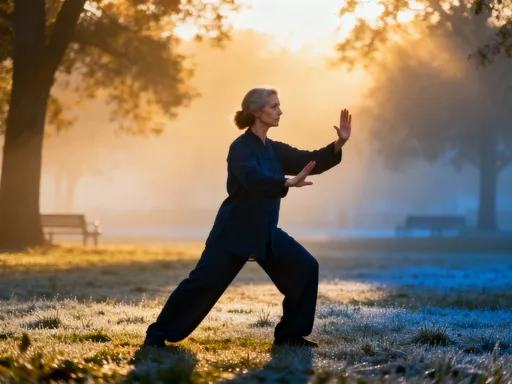
For example, the idea of “unblocking qi flow” closely parallels the modern understanding of autonomic nervous system balance. When qi is said to be stagnant, it often describes symptoms we now recognize as chronic stress: fatigue, digestive issues, tension, and mood swings. Practices like tai chi, qigong, and yoga all aim to restore flow—not through mystical energy, but through breath, movement, and focused attention. These actions stimulate the vagus nerve, which is the main pathway of the parasympathetic nervous system. When the vagus nerve is activated, heart rate slows, digestion improves, and the mind becomes calmer. This isn’t philosophy—it’s physiology.
Similarly, the yangsheng emphasis on prevention aligns perfectly with modern public health principles. Just as we brush our teeth daily to prevent cavities, yangsheng encourages daily self-care to prevent illness. This includes adequate rest, mindful eating, and emotional regulation. Yoga and mindfulness fit seamlessly into this framework. They aren’t emergency fixes—they’re daily maintenance. By integrating these practices, I wasn’t adopting a foreign tradition; I was rediscovering a universal truth: that small, consistent actions compound into lasting well-being. The bridge between east and west isn’t contradiction—it’s confirmation.
My Daily Routine: Simple Practices That Actually Work
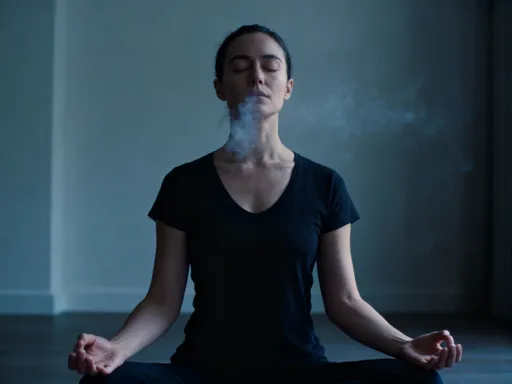
I don’t have hours to spare, and neither do most women in my life. That’s why my routine is designed to be realistic—just 15 to 20 minutes a day, ideally in the morning before the household wakes up. I start with five minutes of diaphragmatic breathing, lying on my back with one hand on my chest and one on my belly. I inhale slowly through the nose for four counts, feel the belly rise, hold for seven counts, and exhale through the mouth for eight counts. This 4-7-8 technique, developed by Dr. Andrew Weil, has been shown to reduce anxiety and improve sleep onset.
Next, I move into gentle yoga on a mat. I focus on cat-cow stretches to mobilize the spine, child’s pose to release tension, and seated forward bends to calm the nervous system. I don’t push into discomfort—the goal isn’t flexibility, but awareness. I pay attention to where I hold tension—often in the shoulders and jaw—and breathe into those areas. After ten minutes of movement, I sit quietly for another five, practicing a body scan. I mentally move from my toes to my head, noticing any sensations without trying to change them. If my mind wanders, I gently return to the breath.
The changes weren’t immediate, but they were real. Within three weeks, I noticed I was falling asleep faster. My mornings felt less rushed, even when the day itself was busy. I was less reactive—when the kids argued or a work deadline loomed, I paused before responding instead of snapping. My focus improved, and I stopped relying on afternoon coffee to stay alert. These weren’t dramatic transformations, but subtle shifts that added up. I wasn’t becoming a different person—I was becoming more myself, less clouded by stress.
Making It Stick: How to Build a Lasting Habit
The biggest challenge wasn’t the practice itself—it was consistency. Like many women, my time is fragmented. There were days I skipped my routine because the laundry needed folding or a call with my mom ran late. I used to see this as failure, but now I see it as part of the process. The key to making mindfulness and yoga last isn’t perfection—it’s persistence. Research on habit formation shows that it takes an average of 66 days for a new behavior to become automatic, but progress isn’t linear. What matters is returning to the practice, even after a break.
One strategy that helped me was habit stacking—linking the new behavior to an existing one. I paired my breathing exercises with making morning tea. As soon as the kettle whistled, I sat down and did five minutes of 4-7-8 breathing before pouring the water. Another tactic was environment design: I kept my yoga mat unrolled in the bedroom, so it was visible and accessible. When something is easy to do, you’re more likely to do it. I also started tracking small wins in a journal—not with strict metrics, but with simple notes like “felt calmer during meeting” or “fell asleep without scrolling.” This reinforced progress and built motivation.
If you’re starting out, begin with just five minutes a day. Set a timer. Use a guided audio if it helps. The goal isn’t to “do it right”—it’s to show up. Over time, you can gradually increase the duration. The science is clear: even brief, regular practice leads to measurable benefits. A study from Carnegie Mellon University found that participants who practiced mindfulness for just 13 minutes a day over eight weeks showed significant improvements in attention and emotional regulation. It’s not about adding more to your plate—it’s about creating space so everything else feels more manageable.
Why This Isn’t a Cure-All—And That’s Okay
It’s important to be honest: yoga and mindfulness aren’t magic. They won’t erase every problem or replace medical treatment. If you’re dealing with clinical anxiety, depression, or a chronic health condition, these practices should complement, not substitute, professional care. I say this not to diminish their value, but to protect their integrity. Overpromising leads to disappointment, and disappointment leads to abandonment. These tools work best as part of a holistic approach that includes proper nutrition, sleep hygiene, physical activity, and, when needed, therapy or medication.
There are days when I still feel overwhelmed. A family crisis, a sick child, a tight deadline—life happens. But now I have a toolkit. Instead of spiraling, I can pause, breathe, and choose my response. That doesn’t make the stress disappear, but it changes my relationship to it. I’ve learned to recognize when I need more than a breathing exercise—when it’s time to call my doctor, talk to a counselor, or simply rest. Wellness isn’t about constant calm; it’s about resilience. It’s about knowing you have resources, even when life is hard.
The research supports this balanced view. A 2020 review in JAMA Internal Medicine concluded that mindfulness programs can help reduce symptoms of anxiety and depression, but their effects are moderate and work best alongside other treatments. Yoga has been shown to improve quality of life in people with chronic pain, but it’s not a replacement for medical intervention. These findings don’t weaken the case for mindfulness—they strengthen it. They show that these practices are most powerful when integrated into a broader, realistic approach to health.
Wellness isn’t a destination. It’s not something you achieve and then forget. It’s a daily practice, like brushing your teeth or eating well. My journey from burnout to balance wasn’t dramatic—it was gradual, built on small, science-aligned steps. I didn’t need a miracle. I needed tools that worked, that fit into real life, and that respected both ancient wisdom and modern understanding. Yoga and mindfulness gave me that. They helped me reclaim my sleep, my focus, and my sense of calm. They reminded me that taking care of myself isn’t selfish—it’s necessary. And if I can do it, so can you. Not perfectly, not every day, but consistently enough to make a difference. That’s the quiet power of practice.